
Skip to content
  • Finnish Government
    • Prime Minister's Office
    • Ministry of Defence
    • Ministry of Transport and Communications
    • Ministry for Foreign Affairs
    • Ministry of Finance
    • Ministry of Economic Affairs and Employment
    • Ministry of Justice
    • Ministry of Education and Culture
    • Ministry of Social Affairs and Health
    • Ministry of the Interior
    • Ministry of Agriculture and Forestry
    • Ministry of the Environment

Valitse kieli:

This page is in Finnish. Go to the English site »

Or choose language:

Den här sidan är på finska. Gå till den svenska versionen av sidan »

Eller välj språk:

Dát siidu lea suomagillii. Sirdás davvisámegielat siidduide »

Dahje vállje giela:

Язык этого сайта финский. Перейти на русскоязычный сайт »

Или выберите язык:

Cette page est en finnois. Aller sur le site en français »

Ou choisir la langue:

Diese Seite ist auf Finnisch. Wechseln Sie zur deutschen Version »

Oder wählen Sie Ihre Sprache:

Tämä sivu on englanniksi. Siirry suomenkieliseen sivustoon »

Tai valitse kieli:

Choose language:

Den här sidan är på engelska. Gå till den svenska versionen av sidan »

Eller välj språk:

Язык этого сайта английский. Перейти на русскоязычный сайт »

Или выберите язык:

Dát siidu lea eŋgelasgillii. Sirdás davvisámegielat siidduide »

Dahje vállje giela:

Cette page est en anglais. Aller sur le site en français »

Ou choisir la langue:

Diese Seite ist auf Englisch. Wechseln Sie zur deutschen Version »

Oder wählen Sie Ihre Sprache:

Tämä sivu on ruotsiksi. Siirry suomenkieliseen sivustoon »

Tai valitse kieli:

This page is in Swedish. Go to the English site »

Or choose language:

Välj språk:

Язык этого сайта шведский. Перейти на русскоязычный сайт »

Или выберите язык:

Dát siidu lea eŋgelasgillii. Sirdás davvisámegielat siidduide »

Dahje vállje giela:

Cette page est en suédois. Aller sur le site en français »

Ou choisir la langue:

Diese Seite ist auf Schwedisch. Wechseln Sie zur deutschen Version »

Oder wählen Sie Ihre Sprache:

Tämä sivu on pohjois-saameksi. Siirry suomenkieliseen sivustoon »

Tai valitse kieli:

This page is in North Saami. Go to the English site »

Or choose language:

Den här sidan är på nordsamiska. Gå till den svenska versionen av sidan »

Eller välj språk:

Язык этого сайта северосаамский. Перейти на русскоязычный сайт »

Или выберите язык:

Vállje giela:

Cette page est en same du Nord. Aller sur le site en français »

Ou choisir la langue:

Diese Seite ist auf Nordsamisch. Wechseln Sie zur deutschen Version »

Oder wählen Sie Ihre Sprache:

Tämä sivu on venäjäksi. Siirry suomenkieliseen sivustoon »

Tai valitse kieli:

This page is in Russian. Go to the English site »

Or choose language:

Den här sidan är på ryska. Gå till den svenska versionen av sidan »

Eller välj språk:

Dát siidu lea ruoššagillii. Sirdás davvisámegielat siidduide »

Dahje vállje giela:

выберите язык:

Cette page est en russe. Aller sur le site en français »

Ou choisir la langue:

Diese Seite ist auf Russisch. Wechseln Sie zur deutschen Version »

Oder wählen Sie Ihre Sprache:

Tämä sivu on ranskaksi. Siirry suomenkieliseen sivustoon »

Tai valitse kieli:

This page is in French. Go to the English site »

Or choose language:

Den här sidan är på franska. Gå till den svenska versionen av sidan »

Eller välj språk:

Dát siidu lea fránskkagillii. Sirdás davvisámegielat siidduide »

Dahje vállje giela:

Язык этого сайта французский. Перейти на русскоязычный сайт »

Или выберите язык:

Choisir la langue:

Diese Seite ist auf Französisch. Wechseln Sie zur deutschen Version »

Oder wählen Sie Ihre Sprache:

Tämä sivu on saksaksi. Siirry suomenkieliseen sivustoon »

Tai valitse kieli:

This page is in German. Go to the English site »

Or choose language:

Den här sidan är på tyska. Gå till den svenska versionen av sidan »

Eller välj språk:

Язык этого сайта немецкий. Перейти на русскоязычный сайт »

Или выберите язык:

Cette page est en allemand. Aller sur le site en français »

Ou choisir la langue:

Wählen Sie Ihre Sprache:

  • Valitse kieli Suomi
  • Välj språket Svenska
  • Select language English
  • Vállje giela Davvisámegiella
Media
Ministry of Social Affairs and Health
Navigation
  • Frontpage Frontpage
  • Areas of expertise
    • Promotion of welfare Health promotion, harm and crime prevention, environmentional health, inclusion
    • Social and health services Services, healthcare and social welfare system, wellbeing services counties, status of clients, personnel, pharmacotherapy
    • Income security Allowances and benefits, pensions
    • Insurance Insurance institutions, statutory insurance
    • Working life Occupational safety and health, wellbeing at work
    • Gender equality Gender equality policy, equal pay
    • EU and international cooperation EU, Nordic cooperation, WHO, UN, ILO
    • Preparedness Preparedness planning, Medical Helpline 116 117
  • Current issues
  • Columns
  • Projects and legislation
  • Publications
  • Ministry
  • Contact
  • Press releases
  • News
  • MSAH on social media
  • Statistics
  • Sign up for news
  • Service by publication
suomiLue artikkeli suomeksi English

Column: Paths to Promote Nuclear Energy Investments
Ministry of Economic Affairs and Employment
Publication date 31.1.2025 13.06
Type:Column
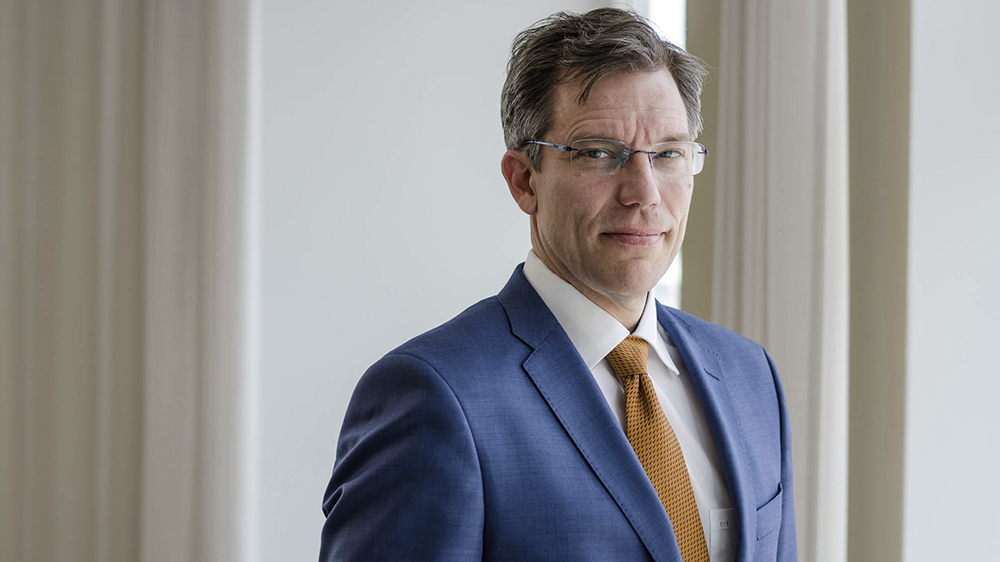
Riku Huttunen in semi close-up pic
Riku Huttunen, Director General, MEAE

In Finland, there is broad recognition of the important role that nuclear energy will also play in the future. There is a willingness to build new capacity, yet the profitability of investments has clearly weakened over the years. What different means could be considered to advance nuclear energy?

A key starting point for the energy policies in Prime Minister Petteri Orpo’s government program is a significant increase in clean electricity generation, including nuclear power. The government has, among other things, committed to approving any application for a decision-in-principle that meets all criteria, provided the applicant’s background is acceptable from a national security perspective.

Currently, Finland has five operating nuclear power units, with Olkiluoto 3 (commissioned in 2023) being the most recent. The share of nuclear power in Finland’s electricity production has risen to 40 percent. These existing units have operating licenses that extend well into the future. Two units that had received positive decisions-in-principle in 2011 – Hanhikivi and Olkiluoto 4 – were never built, for various reasons.

Changing outlook for the sector

Implementing traditional, large-scale nuclear power projects without state support has in recent years proved to be challenging. One reason is the cost-competitiveness of wind and solar power, also evident in the Finnish electricity market.

This competitive situation has brought modular plants and the benefits of serial production to the forefront. Small Modular Reactors (SMRs) have become the focus of extensive development efforts. There are few ready-made models at present, but in Finland, particularly, work is underway to develop reactors for heat production.

Society is becoming more electrified and needs more clean power. However, scenarios vary significantly: estimates place electricity consumption at between 110 and 160 terawatt-hours in 2035 (last year, consumption was 83 TWh). The ongoing construction of data centers is one major factor driving up demand; another is the target of attracting energy-intensive industrial investments. Growth in demand is crucial to spurring the development of new electricity production.

It is worth noting that nuclear power is not an effective solution to the price fluctuations and variability already present in wind and solar power production. Any new nuclear power would come online slowly, and its primary role is not to serve as balancing capacity. For ensuring adequate and continuous power output, it is already essential to invest in demand and supply flexibility and in various energy storage solutions. A “fossil-free flexibility” working group under the Ministry is currently mapping out quickly implementable solutions.

In the longer term, nuclear power would serve as a base load solution, although its construction takes 10–15 years. Of course, one should not forget that Teollisuuden Voima (TVO) is planning output increases at the Olkiluoto 1 and 2 units through additional investments.

SMRs would most likely be used for producing heat for cities or large industrial sites – or in combined heat and power (CHP) production – primarily for profitability reasons. Preliminary planning is underway in locations including Helsinki and Kuopio.

Profitability is key

New nuclear power plants based on traditional technology require subsidies even in countries where electricity prices are significantly higher than in the Nordic region, such as the United Kingdom and the Czech Republic. The situation is thus markedly different from decades past.

In Sweden, plans are underway to build additional nuclear power to replace decommissioned units and meet new electricity demand, supported substantially by the state. An appointed investigator has proposed subsidies both during the construction phase (interest-subsidized loans) and for the operating phase – 40 years – through a guaranteed price. The costs would run into tens of billions of euros. No actual draft law has yet been presented.

Developments in Sweden also highlight challenges for Finland. It appears that new, traditional nuclear power production is far from profitable on its own. Even enabling construction may require government guarantees or loans. The Finnish state already has significant guarantee liabilities – for instance, for the shipyard industry – amounting to around 70 billion euros in total.

The even bigger question is the guaranteed price or a two-way Contract for Difference (CfD) during operation, which could be very costly – potentially hundreds of millions of euros per year for decades, depending on how much lower the market price is compared to the guaranteed price. Although the guaranteed price mechanism works both ways—meaning that in periods of high prices, the company would be the payer—the net effect would very likely be along the lines described here.

Forecasting the future price of electricity is particularly difficult. The resulting costs would be passed on either to electricity consumers or taxpayers. Subsidies also affect all players in the electricity market, slow the emergence of market-based investments, and could increase the price of electricity for the consumer. The Nordic model has been successful, and the average price of electricity is low precisely because prices have been allowed to be determined by the market.

It would also be possible to grant subsidies in the form of investment support, which distorts the market less. However, this does not appear to be enough to jump-start a large nuclear investment. For SMRs, the situation may be different.

Subsidies are not the only tool—permitting will be streamlined

The Ministry of Economic Affairs and Employment (MEAE) is preparing a comprehensive reform of the Nuclear Energy Act. The aim is to streamline and accelerate nuclear facility permitting without compromising safety. The content of various permits is being reviewed to avoid overlapping administrative burdens. The role of decisions-in-principle for nuclear facilities will also be reassessed. For companies, the simultaneous reform of the Radiation and Nuclear Safety Authority’s (STUK) regulatory framework is extremely important.

This work takes into account SMRs, but the reform aims to clarify and improve regulatory procedures across the board. The intention is to submit the draft legislation for public consultation in the summer and present a final proposal to Parliament in about a year.

It is possible to direct and increase research and development funding for new nuclear energy technologies. Piloting is necessary to bring about commercial solutions in the 2030s. Current investment support for energy demonstration projects could also be considered for application to nuclear energy.

The evident financing risks of nuclear power can be shared among companies requiring large amounts of base load power through Finland’s widely used “Mankala model.” In this model, a power company (e.g. Teollisuuden Voima) supplies electricity to its owners at cost price. It will be interesting to see whether the model could attract new and different types of stakeholders. Tax policy solutions can also play a role in attracting investments to Finland.

Growing international interest in nuclear energy

Most new nuclear power plants are currently being built in Asia – China, India, etc. In the United States, construction is gradually picking up, and the Trump administration was assumed to support nuclear energy through large-scale research programs (fission and fusion).

Within the European Union, the shift toward a more favorable stance on nuclear energy is evident. Germany has phased out its last reactors, but countries like the Netherlands and Belgium are showing interest in building new ones. Still, cost and price issues raise concerns in Central Europe too, even though electricity prices there are significantly higher than in Finland.

The new European Commission is clearly more positive – or at least more neutral – toward nuclear energy than its predecessor. The Commission monitors state subsidies for nuclear power, among other things. There are no specific EU regulations on nuclear subsidies yet, so the stance has evolved through case law. Acceptability is increased by competitive bidding for subsidized projects and by focusing subsidies on innovative technologies.

Key global organizations in the sector include the International Atomic Energy Agency (IAEA) and the OECD Nuclear Energy Agency (NEA). Uniform regulatory principles and collaboration among regulatory authorities improve the licensing process and foster industrial-scale technological development.

It is widely acknowledged that new nuclear energy is needed as part of efforts to halt climate change. Financing projects is the key question. The NEA and the International Energy Agency (IEA) have analyzed different financing and risk-sharing models. The IEA’s clear view is that modular reactors can significantly reduce total investment costs and improve bankability.

Energy and climate strategy sets direction; benefits ultimately decide

This spring, under the coordination of the Ministry of Economic Affairs and Employment, Finland is preparing a new National Energy and Climate Strategy, which is an excellent opportunity to clarify the measures that will advance the use of nuclear power. Nor is it in any way too late – no project in Finland has yet reached a point where an investment decision is imminent. Fortum, for example, plans to present its preliminary nuclear energy plans in the coming months.

Ultimately, the question is what the state and Finnish society receive in return for investing in nuclear energy construction. This is by no means an easy discussion, given the current deficit in state finances and the unprecedented and hard-to-predict changes in electricity supply and demand in the coming years. For these reasons, the debate more easily leads to generally enabling measures rather than costly public interventions.

Riku Huttunen is the Director General of the Energy Department of the Ministry of Economic Affairs and Employment

Riku Huttunen
climate policy columns combined production of heat and power confederations of states energy energy policy enterprises finance force greenhouse gases investments legislation nuclear power nuclear power plants organisations permits production of electricity profitability
Back to top

Popular content

Wellbeing services counties on the map

Wellbeing services counties

Legislation on health and social services

Client charges in healthcare and social welfare

Social assistance

Child welfare

Services and benefits for old people

Current issues

Current issues

Press releases

Sign up for news

MSAH on social media

Service by publication

Information about the Ministry

Ministers

Ministry

Contact

For the media

The Ministry as a workplace

E-invoice address


About the stm.fi website

About the site

Data protection

Sitemap

Accessibility statement

Feedback

Ministry of Social Affairs and Health, link to frontpage

Link to an external website Link to an external website Link to an external website Link to an external website Link to an external website Link to an external website

Meritullinkatu 8, 00170 Helsinki

PL 33, 00023 Government, Finland

Switchboard +358 295 16001

registry.stm(at)gov.fi 

Administrative sector of the Ministry of Social Affairs and Health
finnishgovernment.fi
stm.fi Ministry of Social Affairs and Health - All of us have a right and privilege for healthy and safe live.
fimea.fi The Finnish Medicines Agency Fimea
stuk.fi Radiation and Nuclear Safety Authority
thl.fi The National Institute for Health and Welfare
ttl.fi Finnish Institute of Occupational Health
tyosuojelu.fi Occupational Safety and Health Administration
valvira.fi National Supervisory Authority for Welfare and Health
Search page
  • Frontpage
  • Areas of expertise
    • Promotion of welfare
      • Legislation
      • Health promotion
        • Fighting infectious disease
          • Fighting infectious disease: Responsibilities of the authorities
          • COVID-19 disease in Finland
            • Press releases about Coronavirus
          • Avian influenza
      • Promoting participation
        • Key areas of participation and inclusion
        • Roma policy
        • Immigrants' social security, welfare and health
        • Disability policy
      • Substance harm prevention
        • Alcohol policy
          • Alcohol Act
        • Drug policy
          • Narcotics control
        • Tobacco and nicotine policy
          • EU regulation and cooperation
          • Other authorities’ responsibilities
          • Actions to reduce the use
          • Interaction with the tobacco industry
        • Harm caused by gambling
          • Gambling Policy Programme
          • Assessment of risks associated with gambling
          • Parties responsible for gambling policy
          • Gambling system
      • Preventing violence and crime
        • Combating domestic and intimate partner violence
          • NAPE – Committee for Combating Violence against Women and Domestic Violence
        • Combating trafficking in human beings
        • Mediation in criminal and civil cases
        • Violence against children and its prevention
        • Responsibilities in preventing domestic and family violence
      • Environmental health
        • Radiation protection
        • Chemical oversight
          • Cosmetic products
          • Tattoos
      • Advisory Board for Public Health
    • Social and health services
      • Legislation
        • Children, young people and families
        • Old people
        • Secondary use of health and social data
          • Frequently asked questions about the Act on Secondary Use of Health and Social Data
          • Amending the Act on the Secondary Use of Health and Social Data
          • EHDS Regulation
      • Responsible agencies
        • Wellbeing services counties
          • Wellbeing services counties on the map
          • Guidance of the wellbeing services counties
          • Collaborative areas
        • Municipalities
        • Supervisory authorities
        • Private providers of health and social services
        • Centres of excellence on social welfare
        • Organisations and associations
      • Social services
        • Disability services
        • Child welfare
          • Frequently asked questions concerning child welfare in Finland
      • Health services
        • Primary health care
          • Screening
            • Prenatal screening
          • Vaccinations
            • HPV vaccinations
          • Maternity and child health clinics
          • School health care
          • Student health care
        • Occupational health care
        • Private health care
        • Mental health services
        • Services for substance abusers
        • Hospitals and specialised medical care
        • Urgent and emergency health services
        • Client and patient safety
        • Healthcare and social welfare for undocumented persons
        • Termination of pregnancy
      • Rehabilitation
      • Pharmacotherapy
        • Value chain for pharmacotherapy
        • Legislation, steering and supervision, cooperation
        • Safety of pharmacotherapy
        • Rational pharmacotherapy
          • Implementation of sensible pharmacotherapy
          • Information management
            • Digital services
      • Client and patient rights
        • Patient ombudspersons and social services ombudspersons
      • Client fees
      • Social and health care personnel
      • Children, youth and families
        • Services to families
      • Older people services
        • Services and benefits
      • Social security and services of asylum seekers in Finland
        • Healthcare and social welfare for illegal residents
        • Health and social services for people arriving from Ukraine
      • Information management
    • Income security
      • Legislation
      • Financial assistance for families with children
      • Conscripts allowance
      • Housing allowance
      • Unemployment
      • Sickness and rehabilitation
      • Pensions
        • Earnings-related pension
        • National pension
        • Guarantee pension
        • Disability pension
        • Survivors’ pension
      • Front veterans
      • Social security for athletes, grant recipients and students
      • Social assistance
      • Social lending
      • Support and benefits
      • International social security
      • Appealing income security decisions
      • Occupational accidents and illnesses
    • Insurance
      • Legislation and oversight
      • Insurance institutions
      • Supervision of the insurance sector
      • Investing insurance contributions
      • Statutory insurance
      • Social insurance contribution
      • Insurance related appeals
    • Working life
      • Legislation
      • Posted workers
      • Generally applicable collective agreements
      • Occupational safety and health
      • Supervising OSH
        • European cooperation on market surveillance
        • Workplace harassment
        • Vera ICT System
      • Occupational health care and maintaining work ability
        • Value of lost labour input in Finland
      • Development of working life
      • Wellbeing at work
      • Equality in working life
      • Young people and work
      • Family life and work
      • Older workers
    • Gender equality
      • Legislation
      • Mainstreaming
      • Gender equality in working life
      • Equal pay
      • International cooperation
      • Responsible agencies
      • Projects on gender equality
    • EU and international cooperation
    • Preparedness
  • Current issues
    • Press releases
    • News
    • MSAH on social media
    • Statistics
      • Statistics on the promotion of welfare and health
      • Statistics on social welfare and health care services
      • Statistics on income
      • Statistics on insurance
      • Statistics on employment
      • Statistics on equality
      • International statistics
    • Sign up for news
    • Service by publication
  • Columns
  • Projects and legislation
    • All projects and working groups
    • Sufficiency and availability of healthcare and social welfare personnel
    • Social security reform
      • General social security benefit
    • Defining the principles for service choices in healthcare and social welfare
    • National service reform
    • Mental health policy strategy
    • Child Strategy
      • Preparations for a National Child Strategy in 2018-2019
    • RDI Growth Programme for Health and Wellbeing
    • Reducing homelessness with better-targeted health and social services
    • Sustainable Growth Programme for Finland
    • Reform of pharmaceutical matters
    • Personalized medicine
      • Improving health through the use of genomic data
      • Overall project description
      • Genome Center
      • National Cancer Center
      • Biobank Operations
      • National neurocenter
      • Drug Development Centre
      • People and contact details
      • European ‘1+ Million Genomes’ Initiative
    • National health and wellbeing programme Terveydeksi
    • Working life programmes 2023-2027
      • Mental Health at Work Programme
  • Publications
  • Ministry
    • Management and organisation
      • Responsibilities of ministers in the Ministry of Social Affairs and Health
      • Minister of Social Affairs and Health
      • Minister of Social Security
      • Senior Civil Servants
      • Department for Steering of Healthcare and Social Welfare (OHO)
      • Department for Insurance and Social Security (SVO)
      • Department for Safety, Security and Health (TUTO)
      • Department for Communities and Functional Capacity (YTO)
        • YPA - personnel
      • Department for Clients and Services in Healthcare and Social Welfare (APO)
      • Department for Work and Gender Equality (TTO)
      • Strategic and Financial Management Unit (STAR)
      • Human Resources and Administration Unit (HEHA)
      • International Affairs Unit (KVY)
      • Communications Unit (VIE)
    • Strategy
      • Economy of wellbeing
    • Administrative branch
    • Preparedness
      • Preparedness centres
      • Preparedness in the EU
      • Radiation accidents
      • Preparedness in Wellbeing Services Counties
      • Preparedness in wellbeing services counties
    • International cooperation
      • European Union
        • Preparation of EU affairs
      • Council of Europe
        • European Committee of Social Rights
      • United Nations
      • World Health Organization
        • WHO pandemic treaty
      • Global health security
      • Nordic cooperation
        • Finland's Presidency of the Nordic Council of Ministers in 2021
      • Northern Dimension
      • Barents cooperation
      • Arctic cooperation
      • International Labour Organization
      • OECD
    • Economy and activities
    • Forms
    • Expenditure
    • Advisory boards and commitees
    • The Ministry as a workplace
      • Working for the Ministry of Social Affairs and Health
      • Ministry personnel statistics
      • Principles of a safer space
      • Read more about jobs
    • Services
    • History
    • Whistleblower protection
  • Contact
    • Personnel search
    • E-invoice address
    • For media
    • Feedback
    • Data Protection
      • User's rights and requests for personal data
      • Information system descriptions
      • Publicity of documents and requests for information
      • Information on cookies on the website
    • Accessibility statement for the stm.fi website