
Skip to content
  • Finnish Government
    • Prime Minister's Office
    • Ministry of Defence
    • Ministry of Transport and Communications
    • Ministry for Foreign Affairs
    • Ministry of Finance
    • Ministry of Economic Affairs and Employment
    • Ministry of Justice
    • Ministry of Education and Culture
    • Ministry of Social Affairs and Health
    • Ministry of the Interior
    • Ministry of Agriculture and Forestry
    • Ministry of the Environment

Valitse kieli:

This page is in Finnish. Go to the English site »

Or choose language:

Den här sidan är på finska. Gå till den svenska versionen av sidan »

Eller välj språk:

Dát siidu lea suomagillii Sirdás davvisámegielat siidduide »

Dehe vállje giela:

Taat sijđo lii suomâkielân Sirduu anarâškielâlijd sijđoid »

Tâi valjii kielâ:

Tät seidd lij lääʹddǩiõʹlle Sirddu lääʹddǩiõllsaž seiddõʹsse »

Leʹbe vaʹlljed ǩiõl:

Язык этого сайта финский. Перейти на русскоязычный сайт »

Или выберите язык:

Cette page est en finnois. Aller sur le site en français »

Ou choisir la langue:

Diese Seite ist auf Finnisch. Wechseln Sie zur deutschen Version »

Oder wählen Sie Ihre Sprache:

Tämä sivu on englanniksi. Siirry suomenkieliseen sivustoon »

Tai valitse kieli:

Choose language:

Den här sidan är på engelska. Gå till den svenska versionen av sidan »

Eller välj språk:

Dát siidu lea eŋgelasgillii Sirdás davvisámegielat siidduide »

Dehe vállje giela:

Taat sijđo lii eŋgâlâskielân Sirduu anarâškielâlijd sijđoid »

Tâi valjii kielâ:

Tät seidd lij eŋgglõsǩiõʹlle Sirddu lääʹddǩiõllsaž seiddõʹsse »

Leʹbe vaʹlljed ǩiõl:

Язык этого сайта английский. Перейти на русскоязычный сайт »

Или выберите язык:

Cette page est en anglais. Aller sur le site en français »

Ou choisir la langue:

Diese Seite ist auf Englisch. Wechseln Sie zur deutschen Version »

Oder wählen Sie Ihre Sprache:

Tämä sivu on ruotsiksi. Siirry suomenkieliseen sivustoon »

Tai valitse kieli:

This page is in Swedish. Go to the English site »

Or choose language:

Välj språk:

Dát siidu lea ruoŧagillii Sirdás davvisámegielat siidduide »

Dehe vállje giela:

Taat sijđo lii ruotâkielân Sirduu anarâškielâlijd sijđoid »

Tâi valjii kielâ:

Tät seidd lij ruõccǩiõʹlle Sirddu lääʹddǩiõllsaž seiddõʹsse »

Leʹbe vaʹlljed ǩiõl:

Язык этого сайта шведский. Перейти на русскоязычный сайт »

Или выберите язык:

Cette page est en suédois. Aller sur le site en français »

Ou choisir la langue:

Diese Seite ist auf Schwedisch. Wechseln Sie zur deutschen Version »

Oder wählen Sie Ihre Sprache:

Tämä sivu on pohjois-saameksi. Siirry suomenkieliseen sivustoon »

Tai valitse kieli:

This page is in North Saami. Go to the English site »

Or choose language:

Den här sidan är på nordsamiska. Gå till den svenska versionen av sidan »

Eller välj språk:

Vállje giela:

Taat sijđo lii tavesämikielân Sirduu anarâškielâlijd sijđoid »

Tâi valjii kielâ:

Tät seidd lij tâʹvvsääʹmǩiõʹlle Sirddu lääʹddǩiõllsaž seiddõʹsse »

Leʹbe vaʹlljed ǩiõl:

Язык этого сайта северосаамский. Перейти на русскоязычный сайт »

Или выберите язык:

Cette page est en same du Nord. Aller sur le site en français »

Ou choisir la langue:

Diese Seite ist auf Nordsamisch. Wechseln Sie zur deutschen Version »

Oder wählen Sie Ihre Sprache:

Tämä sivu on inarinsaameksi. Siirry suomenkieliseen sivustoon »

Tai valitse kieli:

This page is in Inari Sámi. Go to the English site »

Or choose language:

Den här sidan är på enaresamiska. Gå till den svenska versionen av sidan »

Eller välj språk:

Dát siidu lea anárašgillii Sirdás davvisámegielat siidduide »

Dehe vállje giela:

Valjii kielâ:

Tät seidd lij aanarsääʹmǩiõʹlle Sirddu lääʹddǩiõllsaž seiddõʹsse »

Leʹbe vaʹlljed ǩiõl:

Язык этого сайта инари-саамский. Перейти на русскоязычный сайт »

Или выберите язык:

Cette page est en sami inari. Aller sur le site en français »

Ou choisir la langue:

Diese Seite ist auf Inari Sámi. Wechseln Sie zur deutschen Version »

Oder wählen Sie Ihre Sprache:

Tämä sivu on koltansaameksi. Siirry suomenkieliseen sivustoon »

Tai valitse kieli:

This page is in Skolt Sámi. Go to the English site »

Or choose language:

Den här sidan är på skoltsamiska. Gå till den svenska versionen av sidan »

Eller välj språk:

Dát siidu lea nuortalašgillii Sirdás davvisámegielat siidduide »

Dehe vállje giela:

Taat sijđo lii nuorttâlâškielân Sirduu anarâškielâlijd sijđoid »

Tâi valjii kielâ:

Vaʹlljed ǩiõl:

Язык этого сайта скольт-саамский. Перейти на русскоязычный сайт »

Или выберите язык:

Cette page est en sámi skolt. Aller sur le site en français »

Ou choisir la langue:

Diese Seite ist auf Skolt Sámi. Wechseln Sie zur deutschen Version »

Oder wählen Sie Ihre Sprache:

Tämä sivu on venäjäksi. Siirry suomenkieliseen sivustoon »

Tai valitse kieli:

This page is in Russian. Go to the English site »

Or choose language:

Den här sidan är på ryska. Gå till den svenska versionen av sidan »

Eller välj språk:

Dát siidu lea ruoššagillii Sirdás davvisámegielat siidduide »

Dehe vállje giela:

Taat sijđo lii ruošâkielân Sirduu anarâškielâlijd sijđoid »

Tâi valjii kielâ:

Tät seidd lij ruõššǩiõʹlle Sirddu lääʹddǩiõllsaž seiddõʹsse »

Leʹbe vaʹlljed ǩiõl:

выберите язык:

Cette page est en russe. Aller sur le site en français »

Ou choisir la langue:

Diese Seite ist auf Russisch. Wechseln Sie zur deutschen Version »

Oder wählen Sie Ihre Sprache:

Tämä sivu on ranskaksi. Siirry suomenkieliseen sivustoon »

Tai valitse kieli:

This page is in French. Go to the English site »

Or choose language:

Den här sidan är på franska. Gå till den svenska versionen av sidan »

Eller välj språk:

Dát siidu lea fránskkagillii Sirdás davvisámegielat siidduide »

Dehe vállje giela:

Taat sijđo lii ranskakielân Sirduu anarâškielâlijd sijđoid »

Tâi valjii kielâ:

Tät seidd lij fraansk-ǩiõʹlle Sirddu lääʹddǩiõllsaž seiddõʹsse »

Leʹbe vaʹlljed ǩiõl:

Язык этого сайта французский. Перейти на русскоязычный сайт »

Или выберите язык:

Choisir la langue:

Diese Seite ist auf Französisch. Wechseln Sie zur deutschen Version »

Oder wählen Sie Ihre Sprache:

Tämä sivu on saksaksi. Siirry suomenkieliseen sivustoon »

Tai valitse kieli:

This page is in German. Go to the English site »

Or choose language:

Den här sidan är på tyska. Gå till den svenska versionen av sidan »

Eller välj språk:

Dát siidu lea duiskkagillii Sirdás davvisámegielat siidduide »

Dehe vállje giela:

Taat sijđo lii saksakielân Sirduu anarâškielâlijd sijđoid »

Tâi valjii kielâ:

Tät seidd lij saksslaǩiõʹlle Sirddu lääʹddǩiõllsaž seiddõʹsse »

Leʹbe vaʹlljed ǩiõl:

Язык этого сайта немецкий. Перейти на русскоязычный сайт »

Или выберите язык:

Cette page est en allemand. Aller sur le site en français »

Ou choisir la langue:

Wählen Sie Ihre Sprache:

  • Valitse kieli Suomi
  • Välj språket Svenska
  • Select language English
  • Vállje giela Davvisámegiella
Media
Ministry of Social Affairs and Health
Navigation
  • Frontpage Frontpage
  • Areas of expertise
    • Promotion of welfare Health promotion, harm and crime prevention, environmentional health, inclusion
    • Health and social services Services, healthcare and social welfare system, wellbeing services counties, status of clients, personnel, pharmacotherapy
    • Income security Allowances and benefits, pensions
    • Insurance Insurance institutions, statutory insurance
    • Working life Occupational safety and health, wellbeing at work
    • Gender equality Gender equality policy, equal pay
    • EU and international cooperation EU, Nordic cooperation, WHO, UN, ILO
    • Preparedness Preparedness planning, Medical Helpline 116 117
  • Current issues
  • Columns
  • Projects and legislation
  • Publications
  • Ministry
  • Contact
  • Press releases
  • News
  • MSAH on social media
  • Sign up for news
  • Service by publication
suomiLue artikkeli suomeksi svenskaLäs artikeln på svenska English

Prime Minister Marin’s speech at the referral debate in Parliament on 6 May 2020
Government Communications Department
Publication date 6.5.2020 14.09 | Published in English on 6.5.2020 at 17.49
Type:Speech
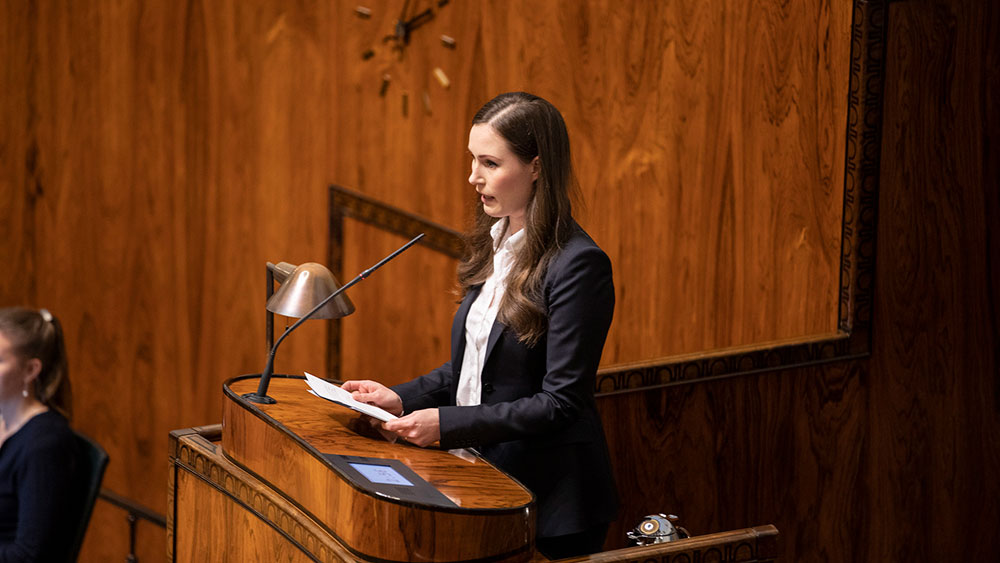
Kuva: Eduskunta/arkistokuva

Check against delivery: Mr Speaker, The Government adopted a resolution today on a plan for the continuation and controlled, gradual dismantling of the restrictive measures put in place to curb the coronavirus epidemic.

Due to the COVID-19 coronavirus pandemic, a state of emergency as referred to in the Emergency Powers Act has been in force in Finland for about two months. Although the spread of the virus is under control, the disease still exists, as does the concrete threat it poses. The Government estimates that regular powers are not sufficient to protect the population and ensure the carrying capacity of the healthcare system. For this reason, the Government has decided to extend some of the powers laid down in the Emergency Powers Act by through decrees on the use of these powers.

The Government has issued two decrees on the use of powers under the Emergency Powers Act. The first is the Decree on the extension of the powers to direct and manage healthcare laid down in section 87 of the Emergency Powers Act. The second decree on the use of powers under the Emergency Powers Act provides for the extension of the powers laid down in sections 86, 88, 93 and 94 of the Act.

Under the Emergency Powers Act, the Decree provides for the management and direction guidance of social welfare and healthcare units, the right of municipalities to waive the time limits for non-urgent care and the assessment of the need for social welfare services laid down in the Health Care Act, derogations from the provisions of the Working Hours Act on rest periods and overtime, and from the provisions of the Annual Holidays Act on the granting of annual holidays in healthcare and social services, rescue services, emergency response centres and the police, and the extension of the notice period for healthcare, rescue and emergency response centre workers, central government employees and municipal officials.

Both amendments will enter into force on 14 May 2020 and will remain in force until 30 June 2020. If the conditions for applying the decrees are no longer met, the decrees will be repealed before the end of June.

Mr Speaker,

The current restrictive measures are, in nature, primarily very general and large-scale restrictions aimed at reducing physical contacts. The restrictive measures imposed and the recommendations issued have been effective in curbing the spread of the epidemic and protecting those belonging to risk groups. However, along with the benefits, restrictive measures also have harmful social and economic effects, and some measures restrict the exercise of fundamental rights. The economic, social and health impacts of the coronavirus epidemic and the related restrictive measures are significant and, in many respects, potentially long-lasting. To reduce the adverse effects of the epidemic and the restrictive measures, a number of support measures have already been decided in order to help people, communities and businesses in the midst of the coronavirus crisis.

As Finland has so far succeeded well in curbing the progress of the epidemic, it is possible to move from extensive restrictive measures to implementing a hybrid strategy based on the “test, trace, isolate and treat” approach. The Government’s is still to try to prevent the spread of the virus in Finland, to safeguard the capacity of the healthcare system and to shield and protect people, especially those who are most at risk.

As restrictive measures are gradually removed, the development of the epidemic and the burden on the healthcare system will be closely monitored and assessed. The Government is committed to assessing its policies in the light of monitoring data and to making changes if necessary.

Mr Speaker,

Finland will gradually open up as we move towards the summer. Our goal is to lift the restrictions in a controlled and gradual manner so that the disease situation remains under control, the carrying capacity of healthcare is not compromised and the lives and health of people at risk can be protected.

From 14 May, comprehensive school education and early childhood education and care will return to contact teaching in a controlled and gradual manner. At the same time, commuting at internal borders will be possible in the same way as at the western and northern borders. Outdoor recreational facilities will also be opened in line with the restrictions on gatherings. The restriction on gatherings of more than ten persons will remain in force until the end of May.

At the same time as comprehensive education and early childhood education and care are resumed, it is also possible to return to contact teaching at other levels of education. However, the Government recommends that universities, universities of applied sciences, upper secondary schools, vocational training institutes, liberal adult education and basic adult education institutes continue distance learning until the end of the semester. Education providers can decide for themselves the extent to which they will arrange contact teaching as necessary. In the summer, contact teaching will be arranged in line with the guidelines on hygiene and physical distancing.

As of 14 May, the statutory restrictions on border traffic will be lifted in cross-border traffic across the Schengen internal borders by allowing employment or commission-related commuting and other essential traffic. The purpose and conditions of the planned stay will be examined during border checks. Border control at internal borders will continue at land borders, ports and airports. The recommendation for shipping companies to suspend the sale of tickets for work-related travel will expire. For the time being, recreational travel abroad is not recommended, and the travel advice issued by the Ministry for Foreign Affairs will be extended accordingly. Everyone has the right to leave Finland and all Finnish citizens have the right to return to Finland. The external borders will remain closed, with certain exceptions. Goods and freight transport, for example, will continue to be allowed. Finland considers it important that the lifting of the restrictions on border traffic be coordinated at the EU level.

Mr Speaker,

As of 1 June, restaurants and cafés can reopen gradually and in a controlled manner. The limit on the number of persons at gatherings will be amended from 10 to 50 persons and the restriction will remain in force until further notice. From the beginning of June, indoor spaces and enclosed outdoor spaces may also reopen, provided that safety is ensured by limiting the number of visitors, maintaining safe distances and issuing hygiene guidelines.

Restaurant, café and bar closures have major economic ramifications that affect one particular sector of the economy. The gradual opening of premises to customers can begin at the start of June, provided that this is supported by the effects of lifting the current restrictions and by the subsequent general epidemiological assessment. This requires legislative amendments that would enable imposition of restrictions on, for example, the number of customers and the alcohol serving hours. Legislative proposals to that effect will be brought for the Government’s consideration on 13 May 2020. The current restrictions laid down in the Act on Accommodation and Catering Business activities and their validity are being assessed every two weeks as required by Parliament.

The restrictions on gatherings are based on the epidemiological assessment of the spread of the disease in situations where the number of physical contacts is high. Under the Communicable Diseases Act, the Regional State Administrative Agencies have the power to prohibit public events and gatherings for no more than one month at a time. Large public events with more than 500 people are prohibited until 31 July 2020 in line with the Government's decision.

Restrictions on gatherings are still necessary. Based on the epidemiological assessment and forecast, it is possible to ease the restrictions on the number of persons at public events and gatherings from the current 10 persons to a maximum of 50 from 1 June onwards until further notice. In addition, as a general guideline, the Government recommends avoiding gatherings of more than 50 persons at private events that are not considered public. These include private celebrations, cultural events, recreational events, sports events and religious events organised by the private and third sectors.

Sports competitions and series can be resumed in June with special arrangements

The public indoor facilities now closed will be reopened in a controlled and gradual manner from the beginning of June. These include national and municipal museums, theatres, libraries, hobby and leisure facilities, swimming pools and other sports facilities, youth facilities and clubs. Borrowing of books and other material from libraries will be permitted immediately. The Ministry of Social Affairs and Health and the Ministry of Education and Culture are preparing a circular for the Regional State Administrative Agencies providing guidance on the hygiene and other requirements necessary to prevent the spread of infectious diseases in public premises and on restrictions on the number of visitors to the premises.

As concerns indoor spaces and enclosed outdoor spaces, such as amusement parks and zoos, safety will be ensured by limiting the number of visitors, ensuring safe distances and providing guidance on personal hygiene. It will therefore be therefore possible to have more than 50 persons in these premises, taking into account the above considerations.

Mr Speaker,

Some of the restrictive measures will remain in force until further notice. For example, the recommendation on remote work and the restrictions on visits to healthcare and social welfare units will continue to be in force.

As a rule, remote work in line with the recommendations has worked out well, and the recommendation will continue to be in force for the time being. Continuing the recommendation is justified in order to reduce the rate of close contact and the risk of infection.

Based on the individual units’ decisions, visits to healthcare and social welfare units have been restricted under section 17 of the Communicable Diseases Act. The restrictions will remain in force until further notice. It is still possible to allow, on a case-by-case basis, the visits of asymptomatic family members of children and critically ill individuals, family members of those in hospice care and spouses or support persons in the maternity ward.

Detailed instructions on the protection of vulnerable groups and groups with an elevated risk of infection will be continued to improve and maintain client and patient safety. These practices are related, among other things, to visits to healthcare and social welfare units. New practices to enable safe social contacts will be promoted in care units, for instance.

The recommended instructions for the protection of population groups at higher risk of infection are upheld and reviewed so that they continue to effectively protect the population against infection. At the same time, it is essential to ensure that the requirements concerning the fundamental and human rights, the functional capacity and the social and economic needs of these population groups are respected and safeguarded.

The recommendation that persons over 70 years of age remain separate from physical contacts with other people as far as possible continues to be in force as a general guideline. However, the Government emphasises that those belonging to risk groups should use their own discretion in following the guideline.

Mr Speaker,

The decisions to continue or dismantle restrictive measures are based on an overall assessment that takes into account epidemiological, legal and other societal aspects of epidemic management, such as social and economic aspects. The Constitutional Law Committee has emphasised that the overall harm to society caused by restrictive measures must be assessed in relation to the benefits achieved by them.

As we move from mitigating the spread of the virus to the next phase of progressively dismantling the restrictions, the responsibility and consideration of each individual, business and community will be further emphasised. The situation is still very serious. For this reason, each and every one of us must look after our own health and that of our fellow citizens. In the midst of all the restrictions and recommendations, what matters most is how we ourselves choose to act. So far, the Finnish people have acted very responsibly and I am confident that we will continue to do so in the future.

Sanna Marin
Parliament of Finland coronaviruses decisions prime ministers systems of representation
Back to top

Popular content

Wellbeing services counties on the map

Wellbeing services counties

Legislation on health and social services

Client charges in healthcare and social welfare

Social assistance

Child welfare

Services and benefits for old people

Current issues

Current issues

Press releases

Sign up for news

MSAH on social media

Service by publication

Information about the Ministry

Ministers

Ministry

Contact

For the media

The Ministry as a workplace

E-invoice address


About the stm.fi website

About the site

Data protection

Sitemap

Accessibility statement

Feedback

Ministry of Social Affairs and Health, link to frontpage

Link to an external website Link to an external website Link to an external website Link to an external website Link to an external website Link to an external website

Meritullinkatu 8, 00170 Helsinki

PL 33, 00023 Government, Finland

Switchboard +358 295 16001

registry.stm(at)gov.fi 

Administrative sector of the Ministry of Social Affairs and Health
finnishgovernment.fi
stm.fi Ministry of Social Affairs and Health - All of us have a right and privilege for healthy and safe live.
fimea.fi The Finnish Medicines Agency Fimea
stuk.fi Radiation and Nuclear Safety Authority
thl.fi The National Institute for Health and Welfare
ttl.fi Finnish Institute of Occupational Health
tyosuojelu.fi Occupational Safety and Health Administration
valvira.fi National Supervisory Authority for Welfare and Health
Search page
  • Frontpage
  • Areas of expertise
    • Promotion of welfare
      • Legislation
      • Health promotion
        • Fighting infectious disease
          • Fighting infectious disease: Responsibilities of the authorities
          • COVID-19 disease in Finland
            • Press releases about Coronavirus
          • Avian influenza
      • Promoting participation
        • Key areas of participation and inclusion
        • Roma policy
          • Advisory Board on Romani Affairs
        • Immigrants' social security, welfare and health
        • Disability policy
      • Substance harm prevention
        • Alcohol policy
          • Alcohol Act
        • Drug policy
          • Narcotics control
        • Tobacco and nicotine policy
          • EU regulation and cooperation
          • Other authorities’ responsibilities
          • Actions to reduce the use
          • Interaction with the tobacco industry
        • Harm caused by gambling
          • Gambling Policy Programme
          • Assessment of risks associated with gambling
          • Parties responsible for gambling policy
          • Gambling system
      • Preventing violence and crime
        • Combating domestic and intimate partner violence
          • NAPE – Committee for Combating Violence against Women and Domestic Violence
        • Combating trafficking in human beings
        • Mediation in criminal and civil cases
        • Violence against children and its prevention
        • Responsibilities in preventing domestic and family violence
      • Environmental health
        • Radiation protection
        • Chemical oversight
          • Cosmetic products
          • Tattoos
        • Advisory Board on Biotechnology
      • Advisory Board for Public Health
    • Health and social services
      • Legislation
        • Children, young people and families
        • Older people
        • Secondary use of health and social data
          • Frequently asked questions about the Act on Secondary Use of Health and Social Data
          • Amending the Act on the Secondary Use of Health and Social Data
          • EHDS Regulation
      • Responsible agencies
        • Wellbeing services counties
          • Wellbeing services counties on the map
          • Guidance of the wellbeing services counties
          • Collaborative areas
        • Municipalities
        • Supervisory authorities
        • Private providers of health and social services
        • Centres of excellence on social welfare
        • Organisations and associations
      • Social services
        • Disability services
        • Child welfare
          • Frequently asked questions concerning child welfare in Finland
      • Health services
        • Primary health care
          • Screening
            • Prenatal screening
          • Vaccinations
            • HPV vaccinations
          • Maternity and child health clinics
          • School health care
          • Student health care
        • Occupational health care
        • Private health care
        • Mental health services
        • Services for substance abusers
        • Hospitals and specialised medical care
        • Urgent and emergency health services
        • Client and patient safety
        • Healthcare and social welfare for undocumented persons
        • Termination of pregnancy
      • Rehabilitation
      • Pharmacotherapy
        • Value chain for pharmacotherapy
        • Legislation, steering and supervision, cooperation
        • Safety of pharmacotherapy
        • Rational pharmacotherapy
          • Implementation of sensible pharmacotherapy
          • Information management
            • Digital services
      • Client and patient rights
        • Patient ombudspersons and social services ombudspersons
      • Client fees
      • Healthcare and social welfare personnel
        • Frequently asked questions about the operating models and division of duties of healthcare and social welfare personnel
      • Children, youth and families
        • Services to families
      • Older people services
        • Services and benefits
      • Social security and services for asylum seekers in Finland
        • Healthcare and social welfare for illegal residents
        • Health and social services for people arriving from Ukraine
      • Information management
    • Income security
      • Legislation
      • Finnish social security system
      • Unemployment
      • Sickness and rehabilitation
      • Pensions
        • Earnings-related pension
        • National pension
        • Guarantee pension
        • Disability pension
        • Survivors’ pension
      • Housing allowance
      • Social assistance
      • Financial assistance for families with children
      • Social security for athletes, grant recipients and students
      • Front veterans
      • Conscripts allowance
      • Occupational accidents and illnesses
      • Social lending
      • International social security
      • Appealing income security decisions
    • Insurance
      • Legislation and oversight
      • Insurance institutions
      • Supervision of the insurance sector
      • Investing insurance contributions
      • Statutory insurance
      • Social insurance contribution
      • Insurance related appeals
    • Working life
      • Legislation
      • Generally applicable collective agreements
      • Occupational safety and health
      • Supervising OSH
        • European cooperation on market surveillance
        • Vera ICT System
      • Occupational health care and maintaining work ability
        • Value of lost labour input in Finland
      • Development of working life
      • Wellbeing at work
      • Family life and work
      • Older workers
    • Gender equality
      • Legislation
      • Mainstreaming
      • Gender equality in working life
        • Equal pay
      • International cooperation
      • Responsible agencies
    • EU and international cooperation
    • Preparedness
      • Pandemic preparedness
  • Current issues
    • Press releases
    • News
    • MSAH on social media
    • Sign up for news
    • Service by publication
  • Columns
  • Projects and legislation
    • All projects and working groups
    • Sufficiency and availability of healthcare and social welfare personnel
    • Social security reform
      • General social security benefit
    • Defining the principles for service choices in healthcare and social welfare
    • Mental health policy strategy
    • Child Strategy
    • RDI Growth Programme for Health and Wellbeing
    • Sustainable Growth Programme for Finland
    • Reform of pharmaceutical matters
    • Preventing sexual harassment at work
    • Personalized medicine
      • Improving health through the use of genomic data
      • Overall project description
      • Genome Center
      • National Cancer Center
      • Biobank Operations
      • National neurocenter
      • Drug Development Centre
      • People and contact details
      • European ‘1+ Million Genomes’ Initiative
    • National health and wellbeing programme Terveydeksi
    • Working life programmes 2023-2027
      • Mental Health at Work Programme
    • National Cancer Strategy
  • Publications
  • Ministry
    • Management and organisation
      • Responsibilities of ministers in the Ministry of Social Affairs and Health
      • Minister of Social Affairs and Health
      • Minister of Social Security
      • Senior Civil Servants
      • Department for Steering of Healthcare and Social Welfare (OHO)
      • Department for Insurance and Social Security (SVO)
      • Department for Safety, Security and Health (TUTO)
      • Department for Communities and Functional Capacity (YTO)
        • YPA - personnel
      • Department for Clients and Services in Healthcare and Social Welfare (APO)
      • Department for Work and Gender Equality (TTO)
      • Strategic and Financial Management Unit (STAR)
      • Human Resources and Administration Unit (HEHA)
      • International Affairs Unit (KVY)
      • Communications Unit (VIE)
    • Strategy
    • Administrative branch
    • Preparedness
    • International cooperation
      • European Union
        • Preparation of EU affairs
      • Council of Europe
        • European Committee of Social Rights
      • United Nations
      • World Health Organization
        • WHO pandemic treaty
      • Global health security
      • Nordic cooperation
        • Finland's Presidency of the Nordic Council of Ministers in 2021
      • Northern Dimension
      • Barents cooperation
      • Arctic cooperation
      • International Labour Organization
      • OECD
    • Finances and operations
    • Expenditure
    • The Ministry as a workplace
      • Working for the Ministry of Social Affairs and Health
      • Ministry personnel statistics
      • Principles of a safer space
      • Read more about jobs
    • Whistleblower protection
    • Statistics
      • Statistics on the promotion of welfare and health
      • Statistics on social welfare and health care services
      • Statistics on income
      • Statistics on insurance
      • Statistics on employment
      • Statistics on equality
  • Contact
    • Personnel search
    • E-invoice address
    • For media
    • Feedback
    • Data Protection
      • User's rights and requests for personal data
      • Information system descriptions
      • Publicity of documents and requests for information
      • Information on cookies on the website
    • Accessibility statement for the stm.fi website